
Love Is In The Air

Spring, a time when love is in the air, quite literally as I was reminded by a female southern mole cricket who flew smack dab into my face last night as I was exiting the garage. It appears I was in the way of this Ladylove and her boisterous suitor who has taken up residence in our front lawn. Mole crickets are truly strange looking chimera-like insects with a head and thorax resembling a crawdad (crayfish), an abdomen of a large cricket and strong, fossorial, mole-like forelegs that allow them to churn through the soil.
The exotic tawny, southern, and short-winged mole crickets were introduced from South America over 100 years ago and are the species most associated with injury to turfgrass. The tawny and southern mole cricket are found in the southern U.S. while the short-winged mole cricket is exclusive to Florida. Many turfgrass managers in northern states consider mole crickets a southern problem and are often caught off guard when they happen upon the native northern mole cricket. The northern mole cricket (which occurs in the south as well oddly enough) is often associated with wetlands and marsh-like habitats. On rare occasions this species becomes a problem for managed turfgrass near water-features. All mole cricket species inflict damage by tunneling through turfgrass. The tawny and short-winged mole crickets also feed almost exclusively on turfgrass plants and are capable of exacting substantial damage.
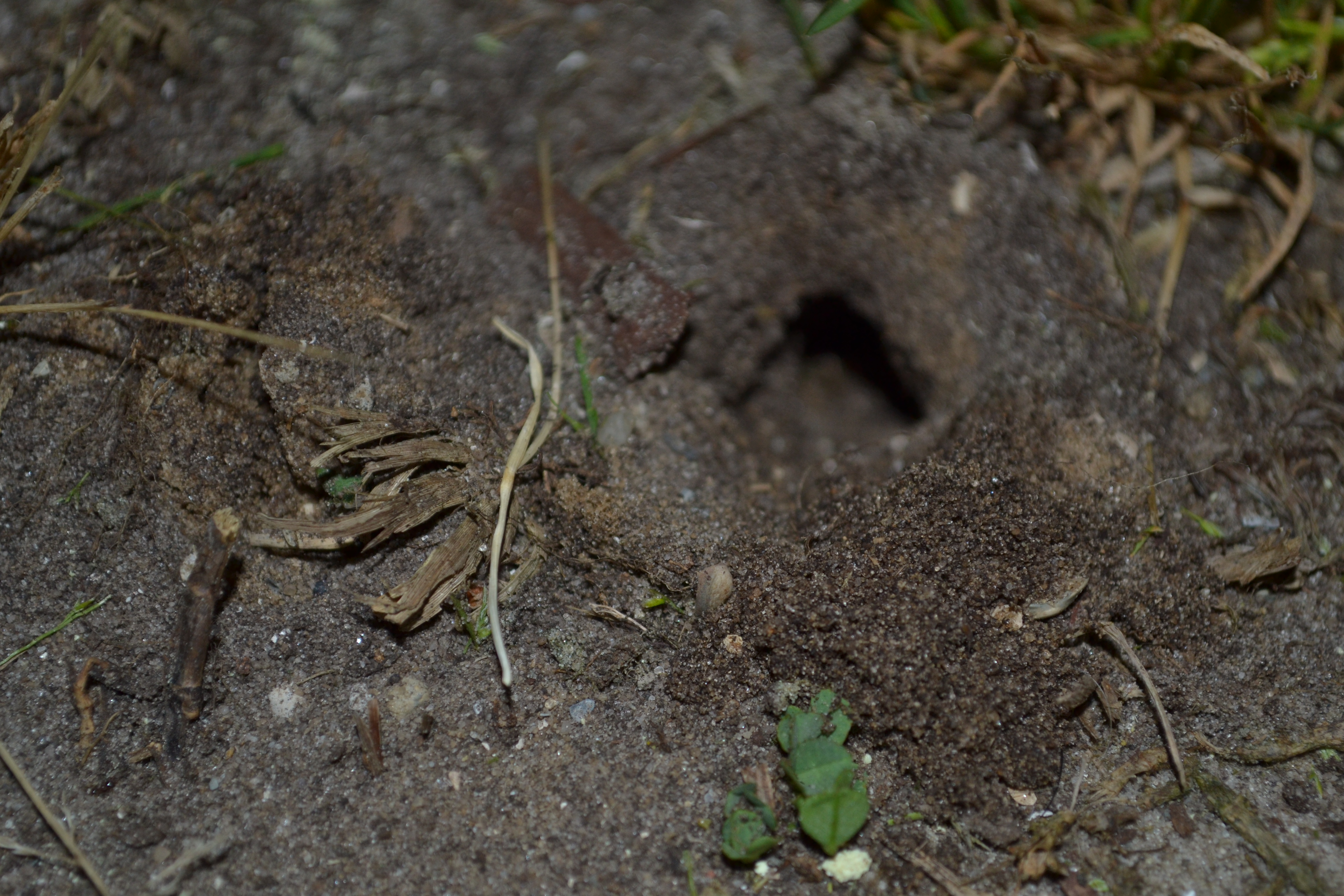
Mole cricket mating flights appear to be in full swing now here at the coast. The trill of male crickets’ calling from their megaphone-like burrows fill the humid night air. Females will choose a male to mate with and subsequently where to lay her eggs based on the quality of a male cricket’s call. Eggs are subject to desiccation therefore females are more attracted to calls produced from burrows containing adequate soil moisture to ensure survivability of her young. Our Romeo from last night had made a wise choice by constructing his burrow 2.5ft from a sprinkler head in an area of the yard I lovingly refer to as “Poa Ptch”. Historically flight periods for mole crickets in North Carolina fall a month behind crickets in the southern range of Florida by about a month. Look for mating flights and egg laying to continue into June and waning in July and August.
As is the case with other insects, mole crickets are easiest to kill when they are young, specifically when they are less than a half inch long. Unfortunately many folks don’t realize they have an infestation until damage becomes evident from the older, larger crickets in August, they then put out a treatment that results in poor control. Egg hatch usually occurs five to six weeks after mating therefore tracking mating flight duration and egg hatch is crucial for successful management. A useful trick for monitoring mole cricket hatch and development is the soapy water flush. Easily mix 1 oz of lemon scented Joy dishwashing liquid in 2 gal of water and pour over an area of about 10 square feet. The soap will irritate the crickets and force them to the soil surface. This process may take up to 15 minutes so be patient. Another important factor to take into consideration when dealing with mole crickets involves their ability to detect and avoid insecticide treated soil. Research from NC State’s turfgrass entomology program has shown that mole crickets have the ability to detect soil treated with either biological control agents and conventional insecticides. The ability of mole crickets to avoid or escape treated soil is greater for older crickets which again makes monitoring important.
For more on mole cricket insecticide avoidance check out Dr. Diane (Silcox) Reynold’s Master’s work here: http://repository.lib.ncsu.edu/ir/bitstream/1840.16/6707/1/etd.pdf
We will be keeping an eye on our mole cricket nursery now in “Poa Patch” and keep you updated on the progress of our newest additions throughout the summer!
 parkerbiolabs.com