
Let them Bee!
It’s that time of year again and concerned calls regarding ground nesting bee activity have started to roll in. While these pint-sized pollinators and their bustling “bee-burgs” can be intimidating, there is little cause for alarm. Of the 4,000 native bee species within the US, 70% nest below ground1. These include: membrane bees, digger bees, leaf cutter bees, mason bees and tiny metallic sweat bees. Ground nesters also known as mining bees, are solitary bees and do not belong to a queen ruled, drone defended colony. Many native ground nesting bees are described as specialist pollinators and are vital to the ecosystem. These species have specific groups of flowers, shrubs and fruit trees that depend on their pollination services.

From February to mid-May female ground nesting bees tunnel into the soil creating nesting chambers. From the exterior, a chamber resembles an ant mound yet has an opening a bit wider than the bee who made it, usually ¼ in diameter. On the interior, the chamber may exceed twelve inches in depth and branch multiple times into single brood cells. Over a period of several weeks, female bees will provision each cell with collected pollen and nectar, lay a single egg within each brood chamber and then seal them. The larvae feed off the packed pollen and nectar as they develop2. These bees will overwinter as adults and emerge between February and May to mate and begin the cycle again (personal observation).
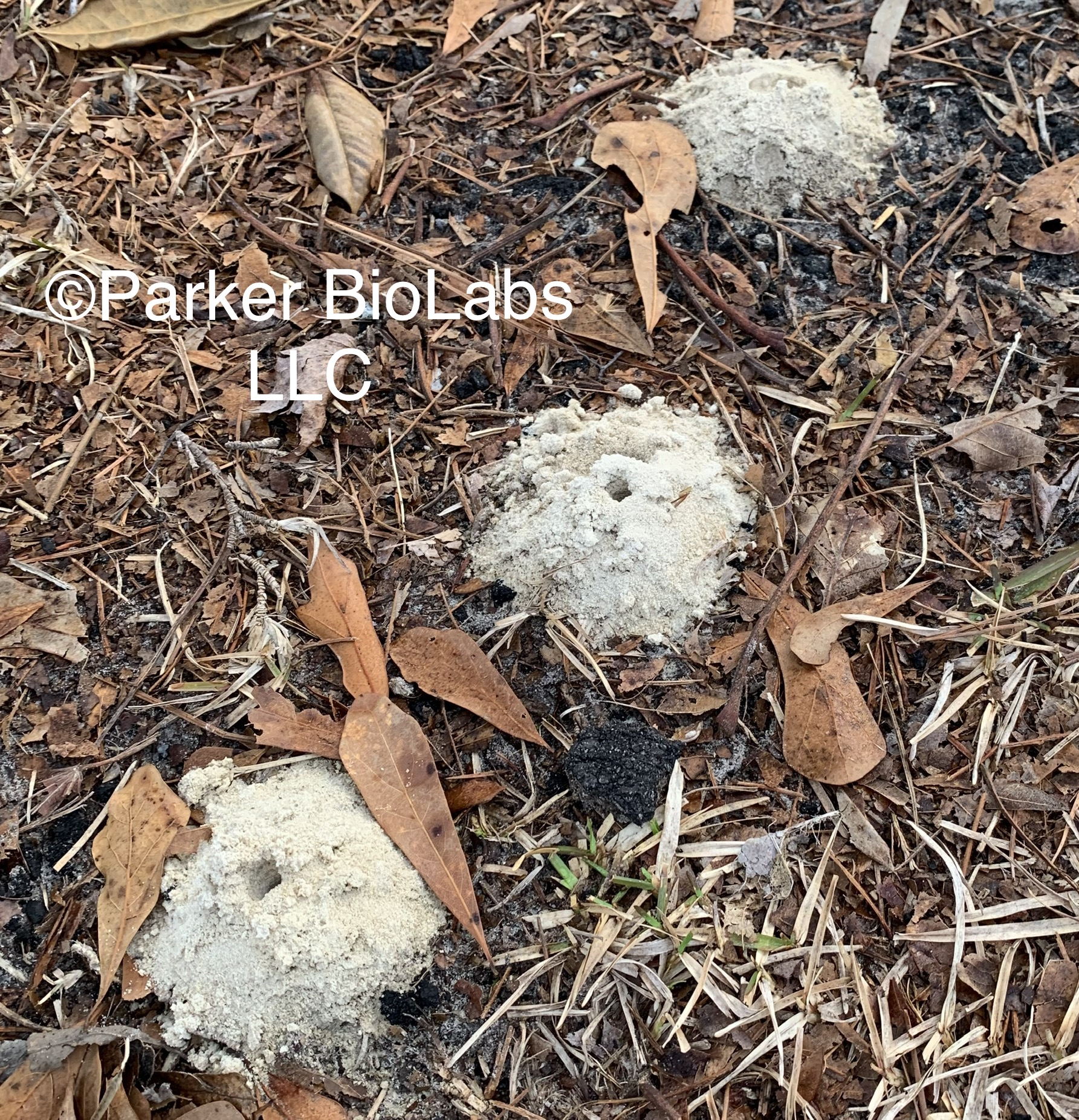
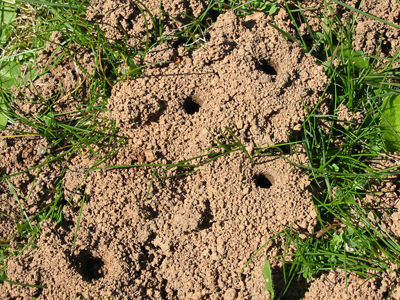
Although these bees are solitary they tend to be gregarious nesters and bee-burgs may result when favorable habitat and environmental conditions occur. Sandy, well-drained soils lacking ground cover with plenty of sun are preferred to moist, vegetated areas. One may witness large numbers of male bees gathering near a burrow entrance trying to gain access to a female. While bee-burgs and their residents may appear menacing, ground nesters are not wired to swarm in vigorous defense of a colony and are in reality quite docile as they move from flower to nest and back again.
Habitat loss, climate change, competition from invasive species, disease and parasites are just a sampling of the multiple threats facing our native bees, bees that are critical for native plant pollination. Ground nesting and mining bees are active for a short window of time, usually about 4 weeks. I would like to encourage readers to have patience and endure these important species for the short time they are around. If bees become a nuisance, future females may be discouraged from burrowing in possible nesting sites by providing adequate ground cover in the form of mulch or dense turfgrass and by increasing soil moisture through irrigation3. When it comes to ground nesting bees, conservation not elimination is key!
References:
1 https://entomology.cals.cornell.edu/extension/wild-pollinators/native-bees-your-backyard
2 http://www.fs.usda.gov/Internet/FSE_DOCUMENTS/stelprdb5306468.pdf
3. Brandenburg R.L., Freeman C.P. 2012. Handbook of Turfgrass Insects. 2nd ed. Entomological Society of America, Lanham, MD.
 parkerbiolabs.com